Wednesday, October 25, 2017

Margarita Espinoza Reviews Nan Goldin

Nan Goldin was born 1953 in Boston, MA. She is a contemporary photographer that is known for exploring themes within love, gender, domesticity, and sexuality. Her career began at 18 when she “fell in with the drag queens”. She lived with many drag queens in downtown Boston and photographed her life among them. She attended the Tufts School of the Museum of Fine Arts in Boston; after graduation she moved to NYC and continued to photograph LGBT-related themes throughout the post-punk new-wave music scene in the late 1970’s. Her work continued on throughout the late 1990’s. 

Nan Goldin’s photography styles can be described as a snapshot aesthetic. Her work is displayed in a series of photobooks that are dated between the 1970's through the 1990's. All of her photos are candids taken from her personal life and the people around her, she believed that her photography was “proof that [she] lived, and no one could revise it”. 
In an interview Nan states, “I didn’t care about good photography, I cared about complete honesty”. She said, “it was a sin to move a beer bottle”, she never adjusted anything or staged any of her photos because she wanted her images to show exactly what was going on in her life. 

Jimmy Paulette and Tabboo! undressing, NYC
1991


Nan one month after being battered
1984


Misty and Jimmy Paulette in a taxi, NYC
1991


Jacqueline Martinez Reviews Bernd and Hilla Becher

Two German photographers; Bernd and Hilla Becher, were known for their documentation of industrial landscapes. The documentation consists of “water towers, grain silos and gas tanks”, using the deadpan technique. Bernd and Hilla Bechers’ style of photographing serves as a “visual case study”, which is connected to the technique used. Their works draw from Conceptual Art which includes, minimalism and repetition. 

Winding Towers (Britain) 1966-97

Their works represent different examples of the architecture structure across different locations. The prints are arranged in a grid system to show the differences between the architecture structures. What's interesting is that their series take years to photograph, this can be contributed to the traveling they take in order to capture different architectural structures. The strength of Bernd and Hilla Becher works is that of using photography’s strength as a source of documentation.

Water Towers, 1972-2009


http://www.tate.org.uk/art/artworks/bernd-becher-and-hilla-becher-gas-tanks-p81237
http://www.artnet.com/artists/bernd-and-hilla-becher/

Margarita Espinoza reviews William Eggleston

William Eggleston was born 1939 in Memphis, Tennessee and is known for the vibrant saturation of color in his work. His work is based on candid shots that are now curated together in a series of photobooks. Eggleston is largely inspired by the work of Henri Cartier-Bresson. I find Eggleston’s work interesting because of the color saturation that is present in his photos from a time period that is typically described in black and white. More specifically, the photos from his portfolio titled Los Alamos includes images from the 1950’s that illustrate the iconic culture known from that decade.

The photos from this collection have a cool-toned color pallet along with a strong light source that emphasizes the shadows and contours of the subject matter. The candid nature of these photos is accompanied by the intentional balance within the frame, which allows the photos to be more engaging to its audience while still staying true to its content. The collection as a whole is a visual description of the day to day events that took place during this time period.


Jasmine Barrios Elinor Carucci


Elinor Carucci, is an Israeli artist who moved to New York. in 1995. In Carucci’s work she often displays close ups of people whether its their eyes, mouth, folds of skin, hair, scars, etc. In some of her work Carucci focused on her relationship with her family who lived together in an apartment for a time period in total it was about 5-6 people this body of work is “Closer” and in a later project she focused on her relationship with her mother, and with her relationship with her children this body of work is “Mother” However in the majority of her work she focuses on close up, detailed and highly exposed shots.  The close up shots emphasize the closeness between her and her relationships the space in her photo is confined which echo’s her lifestyle that she is portraying. 


Jasmine Barrios Lalla Essaydi

Lalla Essaydi is a Moroccan female artist. However she has showcased her artwork internationally. Through Essaydi’s work she is allowing us the audience an insight to her life as female Muslim artist. In her work she showcases woman in sacred places in her hometown Morocco, she returned to her hometown so that she could relive her childhood and once again understand what life as a Muslim Moroccan woman was like. The woman in her photos have sacred text written all over their bodies and sometimes clothing. In other photos the woman are blending in with the sacred building which they are in. the concept behind her work and placing these woman in these setting and adorning them in this text is to represent them as “odalisques” which means to belong to a place. Essaydi is telling a story of how these women and herself belong to where they are from and they are satisfied of who they are. It is literally written on them and they are engulfed in their culture, Essaydi states she doesn’t want to seem like a victim and these photos are not meant for that purpose.  Instead she wants to display proud women who are unashamed of where they are from and who they are.


Jasmine Barrios Robert Mapplethorpe

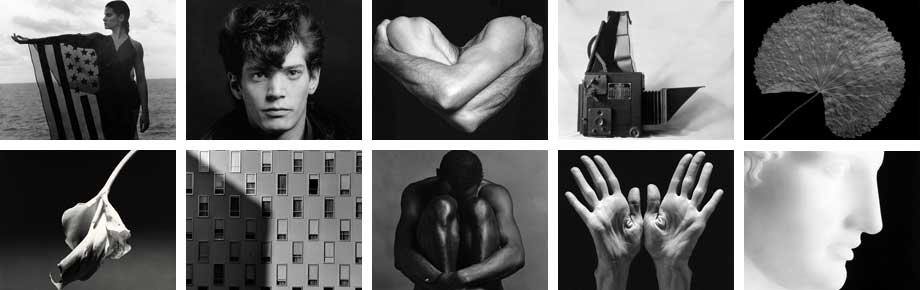
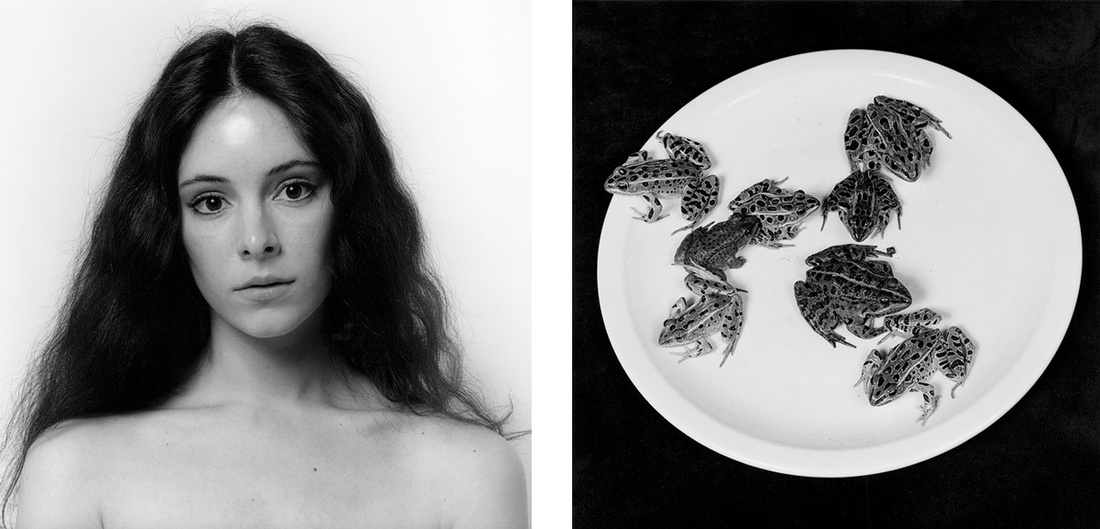
Robert Mapplethorpe began his photography career in the 1970s, he became interested in photography by taking Polaroid’s he included these polaroid’s in mixed media pieces and showed them in his first solo gallery. However in the late 70s he began to take photos of the New York’s scene and decided to primarily focus on photography. Many of Mapplethorpe’s photos are in black and white he rarely deliberately shot in color. He shot flowers and nature very often. He was also interested in men and women roles in society and many of his photographs depict “abnormal” positions of men and women. I was drawn to his work because of how elegant he presents his ideas through his photos. Although elegant and soft they clearly show a powerful and strong message and he was able to capture emotion well through his photos. I am also impressed with how well he shot in black and white to capture great shadows and contrast with intentionality the way he made use of black and white was not only for the aesthetic but for his expressions. The majority of Mapplethorpe’s photos are staged and not natural, in motion or action shots there is a stillness to each photo. The photos allow the viewer to pause and rest because they are simple and straightforward they are not over complex. Unfortunately Mapplethorpe passed away due to AIDS in 1989, the illness did not slow down his artwork it actually continued to flourish throughout the remainder of his life. I believe that Mapplethorpe’s photos still speak to this generation and we can learn through his photographs and gain great insight on how he viewed people and life. 


Henry Lopez Reviews Daisuke Takakura

Daisuke Takakura was born in Saitama, Japan in the year of 1980.  According to Takakura, his images heavily incorporate graphic design and the theater.  The point he wants viewers to come across when viewing his work is to think about existence and choices.  In his series "Monodramatic", he references a theater style where a single actor plays multiple characters, but he puts a spin on it and instead has one's self come into contact with many singular selves.  These would all be versions of you, but a different self, ones that made different decisions than you and are now their own self.  Takakura wants the viewer to think of what that would look like, how that would be, and it all depends on the choices you've made and that "maybe somewhere you are not yourself, but a different self."

As far as Takakura's presentation of these ideas, I really enjoy them.  They can be quirky and lighthearted and others with a little darker of a tone.  The works a colored and lit a fairly cinematic mood and use the same model to play the many versions of themselves.  In consideration of the composition, the majority of images are interesting and keep the viewer engaged while some do lack a sense of wonder.  Overall, I enjoy this work and want to see where he will push it to.