Thursday, March 29, 2018

Sylvia Gutierrez Reviews Duane Michals

        Flourishing with his photography in the 1960’s, an era mostly influenced by photojournalism, Duane Michals manipulated his imagery in a cinematic format to create narratives rather than illustrating reality at the time. Michals is an American photographer who is know for his creative usage of multiple exposures, photo sequences and his integration of text in his work to add to the emotion of the the imagery versus being informative. When this photographer was first introduced to me, what I found to be the most alluring were his photo sequences and how Michals’ work seems to blur the lines between photography and philosophy. Rather than paying attention to the aesthetic of his work, he focuses on how the imagery makes the viewer feel and manages to bring them into his narratives in a deeper level.
        Duane Michals has two sequences that I found very intriguing and similar to each other, Grandpa Goes to Heaven and The Fallen Angel. Although both sequences have a similar theme of angels, the emotions that come forth and the actual situation are different. In the first series of the grandfather passing away we as the viewers sympathize with the emotional transition of melancholy, peace and acceptance as he turns into an angel, versus the angel turning into a man as he experiences desire, lust and desperation. Michals is capable of displaying these emotions and narrative transitions with the usage of lighting, specially on the main characters, whenever they show their humanity there seems to be shadows and a darker essence cast upon them contrary to their divine and luminous presence in the scene.
Grandpa Goes to Heaven
1989
Five gelatin silver prints with hand applied text
The Fallen Angel
1968
Eight gelatin silver prints with hand-applied text

Wednesday, March 28, 2018

Jesusa Vargas reviews Pedro Meyer

Pedro Meyer is a renowned Mexican contemporary photographer born in Spain Madrid. He was the founder and president of the Consejo Mexicano de Fotografia, this was an institution that promoted research in photography. Pedro has also been a teacher, curator, and director of a website name ZoneZero. ZoneZero has been quoted as being a "space for dialogue with photography as a starting point and subject.


The Announcement, 1980
Ocumicho, Michoacan, Mexico.
35mm b/w negative

The highly contrasted image captures my attention in this black and white photograph taken in Mexico. The tonal contrasts include all tones from white, middle grays, to dark blacks. The low key approach the photographer takes creates a mysterious scene. My eyes are, first drawn towards the person in white on the right side of the composition. The white figure is facing left, guiding my eyes in that direction towards the darker background. This, then, pulls me into the image to take a closer inspection and inventory of other subject matter. I feel that this dramatic image becomes visually powerful when creating a highly contrasted composition and places a large focus on the subject in white and creates a serious mood.


The Cornered Virgin, 1975
Mexico
35mm b/w negative

Centering the subject matter and creating a deadpan aesthetic not only forces your full attention but creates a direct relationship, a sense that the woman in the image is looking directly at you. She is forcing us to see her, a voyeuristic approach is then to be had when viewing this photograph. Her body follows the lines of the wall behind her. Her back is up against the corner of the wall and her legs are open, following the lines of each wall to the left and right of her. She becomes the corner of the room. I feel that because the image is black and white, I focus more on the forms, lines, light, and shadows than the nude body as a sexual object.


Self-Portrait in Hell, 1978
New York, N.Y., USA
Poloraid 3.5x4.2" Modification during developing


I chose to share this image because of the different approach taken in creating this photograph. Pedro created a self-portrait on a polaroid and altered it in such a way, during developing, that it created an entire different environment and texture. You can see that the entire image space is not altered/modified, Pedro's image in the left side of the composition is untouched and visible. The surrounding space appears to be distorted, melting or giving an appearance of flames in the bright yellows, orange, and reds. He may have very well taken the image indoors, a bedroom with natural light coming through windows on both sides. Perhaps a yellow curtain changes the tone of the room. The altered environment also creates dimension, depth similar to a bas-relief.


http://zonezero.com/en/
http://www.museum.oas.org/exhibitions/2000s/2008-pedro.html
http://www.pedromeyer.com/heresies/heresies.html
https://www.latinamericanart.com/en/artists/pedro-meyer/biography.html


Tuesday, March 27, 2018

Jamie Salazar profiles Boogie

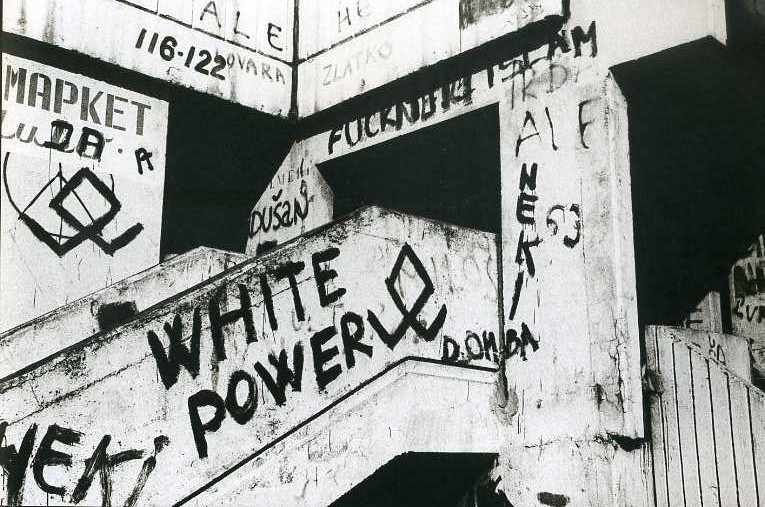
What if your life, your world, even your home was dropped right in the middle of a war zone?  NO, I mean a real life war zone with bombs, guns, and explosions right at your front door.  Would it adjust your perspective of what the definition of home was, is, or could be? 


Image result for boogie belgrade


The contemporary photographer Boogie gives us an insight of just that, a view of life in chaos.  His works not only reflect a certain commentary on life in war, but also how the normalcy of life somehow still continues through these trying outside forces.  His use of contrast and tone is interesting to the eye, as well as very telling of the subjects in which he shoots.  Some of his subjects can also give a feeling of innocence lost, especially when displayed together amongst the anger of war photos.
Image result for boogie belgrade


Boogie’s photos seem to connect and tell a strong narrative story, each one speaks not only on its own but in relation to one another. It is those visual conversations which draw us in as viewers and allow us to understand and even relate to the work in ways other works cannot. 

Image result for boogie belgrade


Born and raised in Belgrade, Boogie grew-up in the middle of the civil unrest of the 1990’s.  With all this true life exposure and experience, the truth and honesty show through in all of the works in the series “Belgrade belongs to me.”  For more about this artist and his many other works check out my two recommended links below.

Artcoup.com  
Powerhousebooks.com


Thursday, March 22, 2018

BELINDA FUENTES REVIEWS DAISUKE TAKAKURA


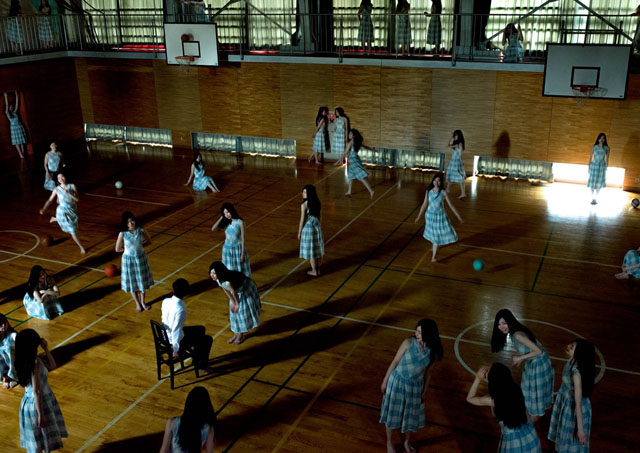
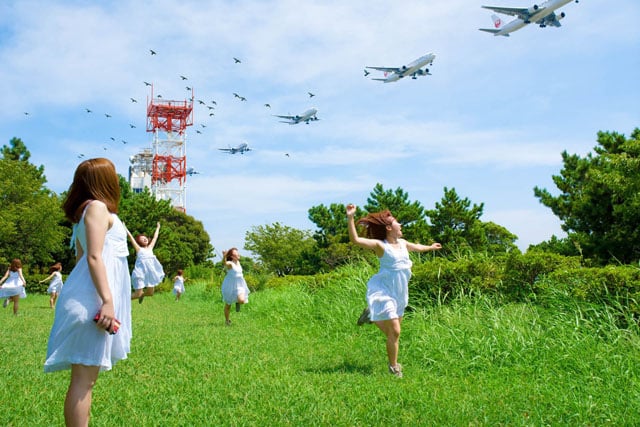
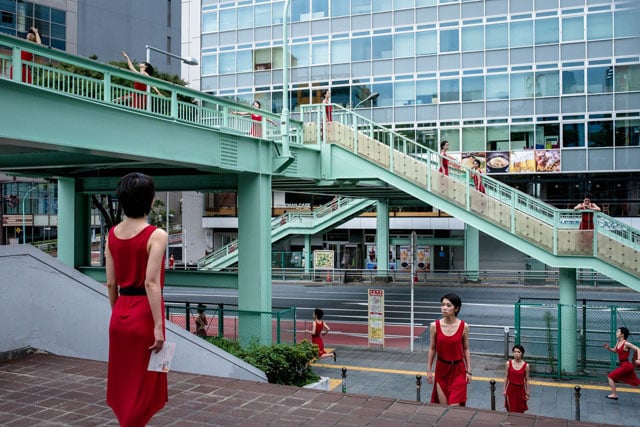
            Imagine a world full of “yous”, similar “yous”, drastically different “yous”, all together, interacting, communicating, and getting to know each other. Imagine multiples of other people interacting with various “thems” but also with the various “yous”. Photographer, Daisuke Takakura’s makes this world more attainable in his series Monodramatic in which his model poses various ways and layers those images to create clones. Takakura’s work Monodramatic draws from a similar named theatrical term, monodrama. From a theatrical background, the movements, interactions and expressions of the selves reflect that. Obviously, Takakura explores the self but more so the alternative self, the self that is, the self that was, the self that could have been and the self that is to come. Further, these people could represent the different sides of you and the different layers of you. Additionally, the amount of layers of these photos on top of each other is impressive. The images are a tad dramatic in expression but the idea of multiples of you and others is interesting to explore.

Monodramatic-15

Monodramatic-4

Monodramatic-6

Thursday, March 15, 2018

Jesusa Vargas reviews James Rodriguez

James Rodriguez graduated from UCLA in 1996 with a degree in Cultural Geography. In 2004, James    was a human rights observer in Guatemala focused on documenting post-war issues, human rights abuses and social conflicts. Some of his recognitions include:
2016 Scholarship recipient for International Center of Photography
2016 NPPA Best of Photojournalism: Honorable Mention
2015 1st place in POY Latin America
2015 Latin American Fotografia 4: Selected for "Los Diez" Exhibit

The 3 photos below highlight the after effects of the brutal Guatemalan civil war (1960-1996) that have resulted in efforts of locating the victims and identifying the bodies so that they may be returned to family for proper burial. This was not only a healing process but also a testimony and evidence of the horrific crimes of genocide committed during this time period.


In the photo below, the photographer focuses in on a woman awaiting for the return of the remains of her deceased relatives killed during the war. The dark black shadow surrounding the central focal point is a stark resemblance to the realities of death and dark news. The light casted on her face from above, the face of another person waiting behind her and on the clenched hands of yet another person waiting for the sad arrival, present the subtle sadness of the grim event as they patiently stand by. Choosing to display this strong contrast between the strong highlights on the subject matter and the dark black surrounding them conveys a strong sense of loneliness and hope.
 
Nebaj, Quiche, Guatemala, 2017.


It is difficult to discern, at first glance, the event that is being photographed below without the caption given. The vibrant colors that we associate Guatemala culture with and the assembly of Guatemalans capture our attention and demand that we visually take in all that is occurring in the composition. We must evaluate the faces closer of those standing and sitting. No smiles, no laughter or captured moments of joy are presented to us. This juxtaposition of the situation and the vibrant culture is disheartening. The people in the photo are awaiting for forensic anthropologists to return the remains of relatives murdered.

 
Nebaj, Quiche, Guatemala, 2017.


In the deadpan approach taken in the photo below, we are confronted with a Guatemalan woman sitting on the edge of her bed, staring directly at us. A sadness comes over her face, we are left to evaluate the surroundings and her body language to draw our own emotions about the subject. We are left with a direct relationship to the woman as we look at her and she looks back at us. This person witnessed family members taken away during the massacre and never to return. It is likely that her family members were exhumed from a training center where they were murdered.


Pacux, Rabinal, Baja Verapaz, Guatemala, 2016

http://www.mimundo.org
http://www.blurb.com/user/mimundo.org


Saturday, March 10, 2018

BELINDA FUENTES REVIEWS CHRISTIAN BERTHELOT


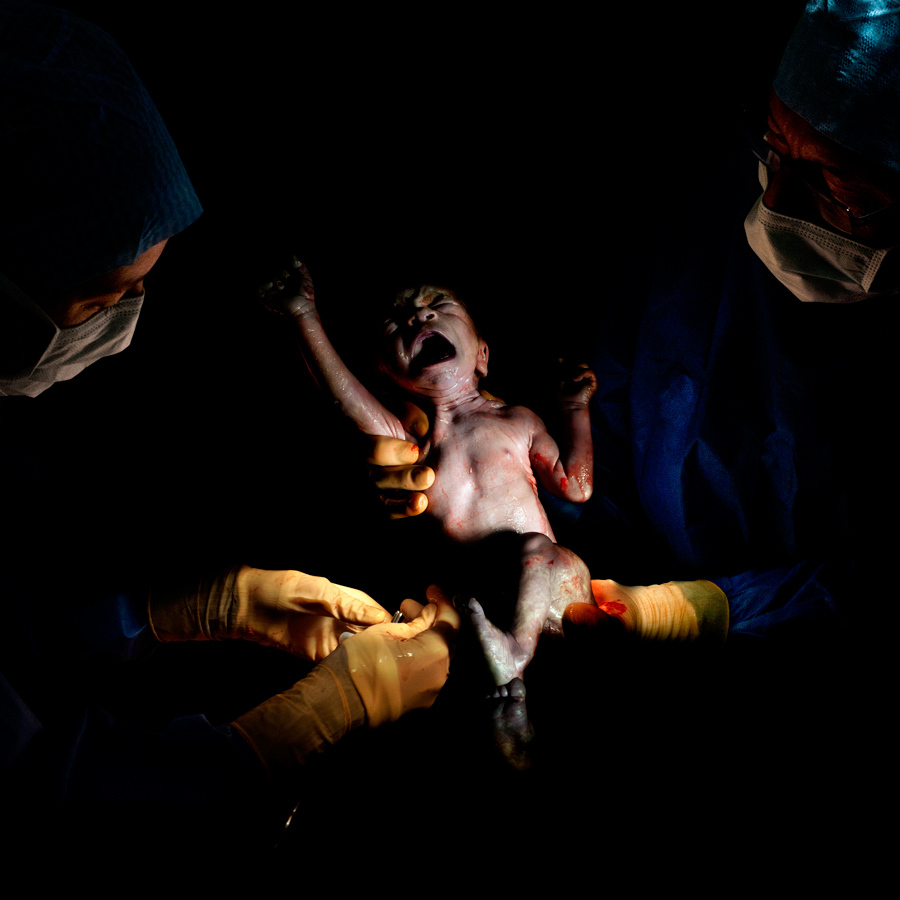
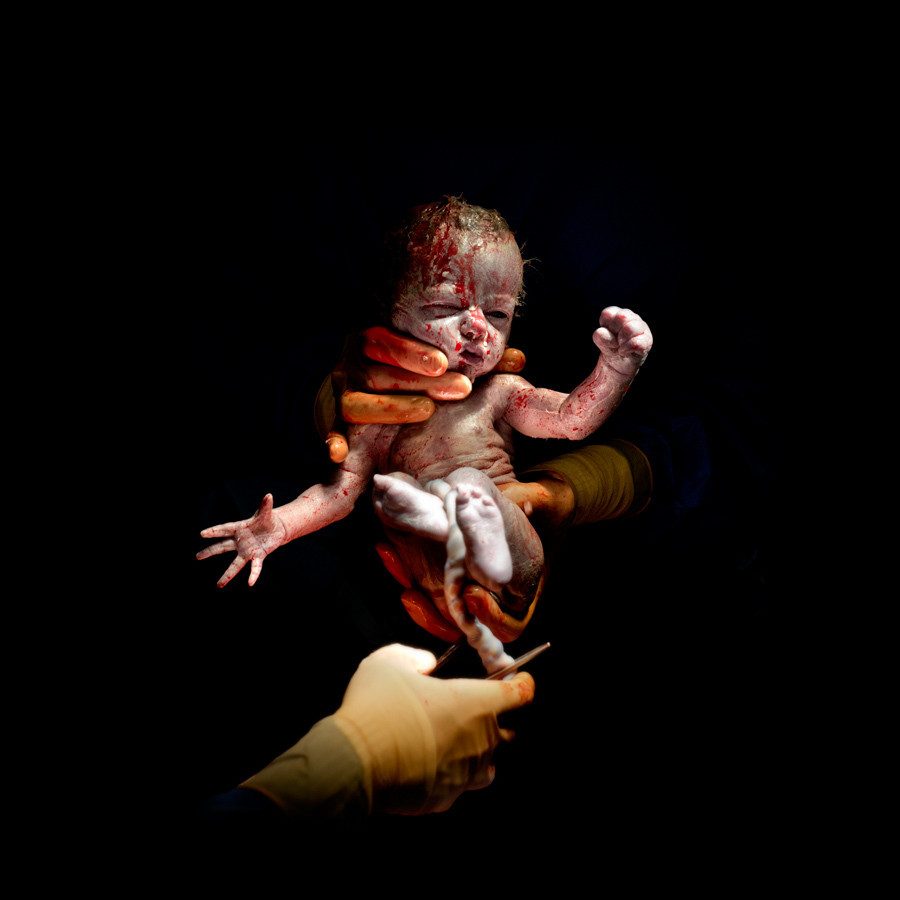
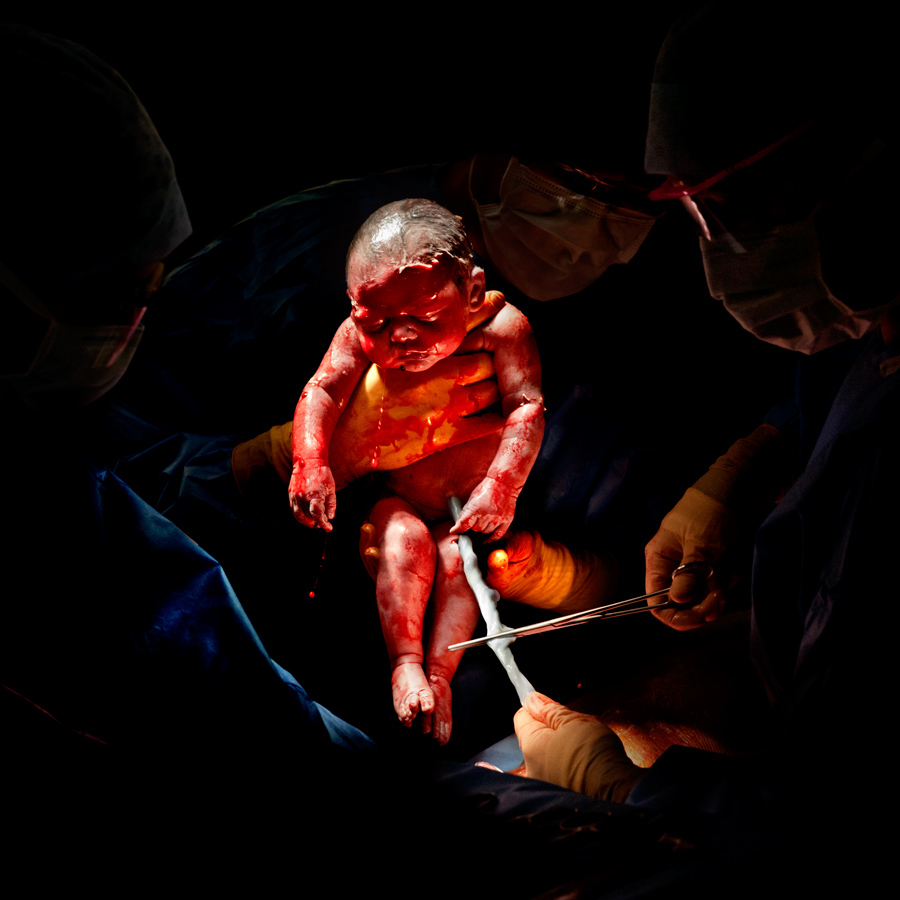
            French artist, Christian Berthelot’s series, CESAR was inspired by the birth of his son during an emergency caesarean. Through a six-month training and permission from parents, Berthelot was able to shoot in a surgical environment during emergency C-sections. Personally, on his first day in the surgical room, Berthelot, in a sense relived his own experience when shooting these babies. The beauty of these images emerges with knowing that these babies were captured at only a few seconds of being in this world. Berthelot captures these babies at the purest moment of their lives, not yet corrupted by the outside world. Further, for those who have not experienced birth other than our own, Berthelot exposes the reality of what babies look like when they are born, the image before the babies are cleaned and exposed to the world. Additionally, the shapes of the babies’ body in which both the doctor and the babies collectively form are captivating. The forms are authentic and unapologetic. With the use of the dramatic spotlight lighting, these images are reminiscent of paintings depicting the carrying of Jesus. At this point in life, these babies cannot hold themselves up and mimic the same body language of Jesus as he lays limp in the arms of his people, particularly seen in the image of baby Liza.


ch

Wednesday, March 7, 2018

Jill Enfield by Augustine Chavez

Photography has always fascinated me, and now, Alternative Process feels really fascinates me. Jill Enfield is a Alternative Process Photographer in New York. I do appreciate work in photography and perhaps, it can be said that a photograph needs to be "right on" in order for it to work. But what attracts me to Alternative Process is the process of making the work and I think because of the process, the process should be visible in the work. Jill Enfield allows for the process to be seen in her work and in her work, we can see that it is about the process as much as it is about the subject matter. In her work, I appreciate the subtleness of the figure in parallel with the process. I appreciate how the artists allows us to see the figure, but at the same time, if feels very abstracted and calls to question the meaning of the work.